
A two-minute checklist before you phone an HVAC company: what to look at, what to write down and what to say so the first visit fixes the problem.
The more clearly you describe an air conditioning problem, the more likely the first visit is to solve it. A technician arrives with some idea of what to bring, and the details you give on the phone help the dispatcher choose the right person and the right parts. Spending two minutes on a checklist before you call pays off.
Look first
- The thermostat: is it on cool, set below the room temperature, and does the display work? Dead batteries are a surprisingly common cause.
- The breaker panel: look for a tripped switch labeled for the air handler or condenser. Switch it off and on once. If it trips again, leave it off and tell the dispatcher.
- The filter: pull it out and look. A filter so clogged that you cannot see light through it can block airflow and cause freezing.
- The indoor unit: look for water in the drain pan or around the cabinet, and for ice on the copper line.
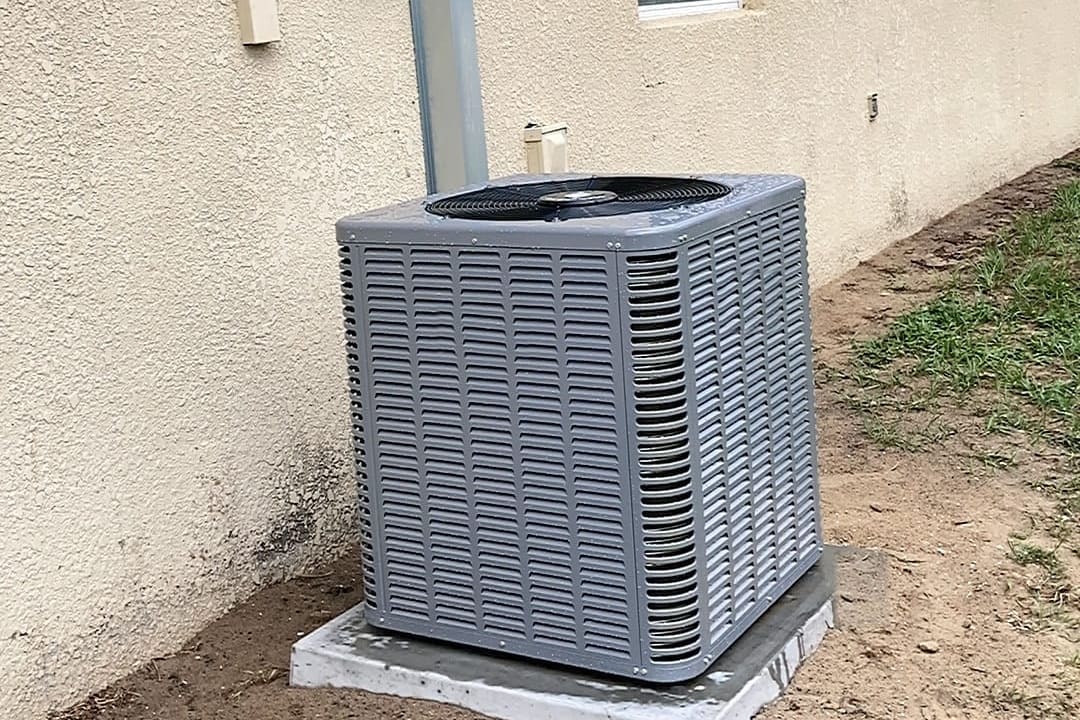
- The outdoor unit: is the fan spinning, and is the unit humming but not starting? Do not touch it if it is hot or damp.
Write down what you notice
- When it started: suddenly, gradually, or after a power flicker or storm.
- What it does: no cooling, weak cooling, short cycling, strange noises, smells.
- Any pattern, such as only in the afternoon or only when the dryer is on.
- Anything that changed recently, like a new filter, a thermostat swap or work done by someone else.
Have the system's details if you can
The nameplate on the outdoor unit and the indoor air handler lists the brand, model number, serial number and the year it was made. A photo on your phone is enough. This tells the technician whether parts for your system are common and whether it is old enough to make a repair a hard decision.
Get your access in order
- Know where the indoor unit is. It may be in a closet, the garage or the attic.
- Clear a path and an area around the units.
- Secure pets, and tell the company about gates or codes.
- Make sure someone over eighteen can be home or reachable to approve the work.
Say what matters to you
Tell the dispatcher if anyone in the home is vulnerable to heat, if you are planning to sell, or if you are already considering a replacement. That helps the company send the technician best suited to the job and bring the right information. It also lets you ask for a repair-versus-replace opinion in the same visit.
Questions to ask before you hang up
- What is the arrival window, and will I be notified when the technician is on the way?
- What does the visit cost, and does it apply toward the repair?
- Will I get a written estimate before work begins?
What not to do
- Do not keep resetting a breaker that keeps tripping.
- Do not open electrical panels or handle refrigerant lines.
- Do not keep running a system that is leaking water or has ice on it.
The payoff
A clear description saves the technician time, which saves you money, and increases the odds the problem is solved in one trip. It also tells you quickly whether you are talking to a company that listens, which is the first thing worth finding out.
Questions we get asked about this
What should I check before I call for AC service?
The thermostat setting and batteries, the breaker panel, the filter, any water or ice at the indoor unit, and whether the outdoor fan is spinning. Do not touch the outdoor unit if it is hot or damp.
What information helps the technician most?
When the problem started, what it does, any pattern such as only in the afternoon, and anything that changed recently. A photo of the nameplate showing the model and serial numbers is also useful.
Why does the nameplate matter?
It lists the brand, model number, serial number and year made. That tells the technician whether parts are common and whether the system is old enough to make a repair a hard decision.
What should I tell the dispatcher about my home?
Whether anyone is vulnerable to heat, whether you plan to sell, or whether you are already considering a replacement. That helps the company send the right technician and information.
What should I avoid doing before the technician arrives?
Do not keep resetting a breaker that keeps tripping, do not open electrical panels or handle refrigerant lines, and do not keep running a system that is leaking water or has ice on it.
Want this looked at rather than read about?
More HVAC tips
Why a Home Inspection Matters Before HVAC Repairs or Replacement
Before HVAC repairs or replacement, a home inspection can uncover hidden issues. Learn why Florida homeowners trust inspections before major HVAC work.
AC Replacement Near Me: Tips for Choosing and Saving
Explore expert tips on AC replacement, costs, and choosing the right system for your home. Find trusted HVAC services near you today!
AC Repair Service | Professional Installation & Maintenance
Get reliable AC repair service, installation, and maintenance to keep your system running efficiently. Contact us today for expert solutions!