

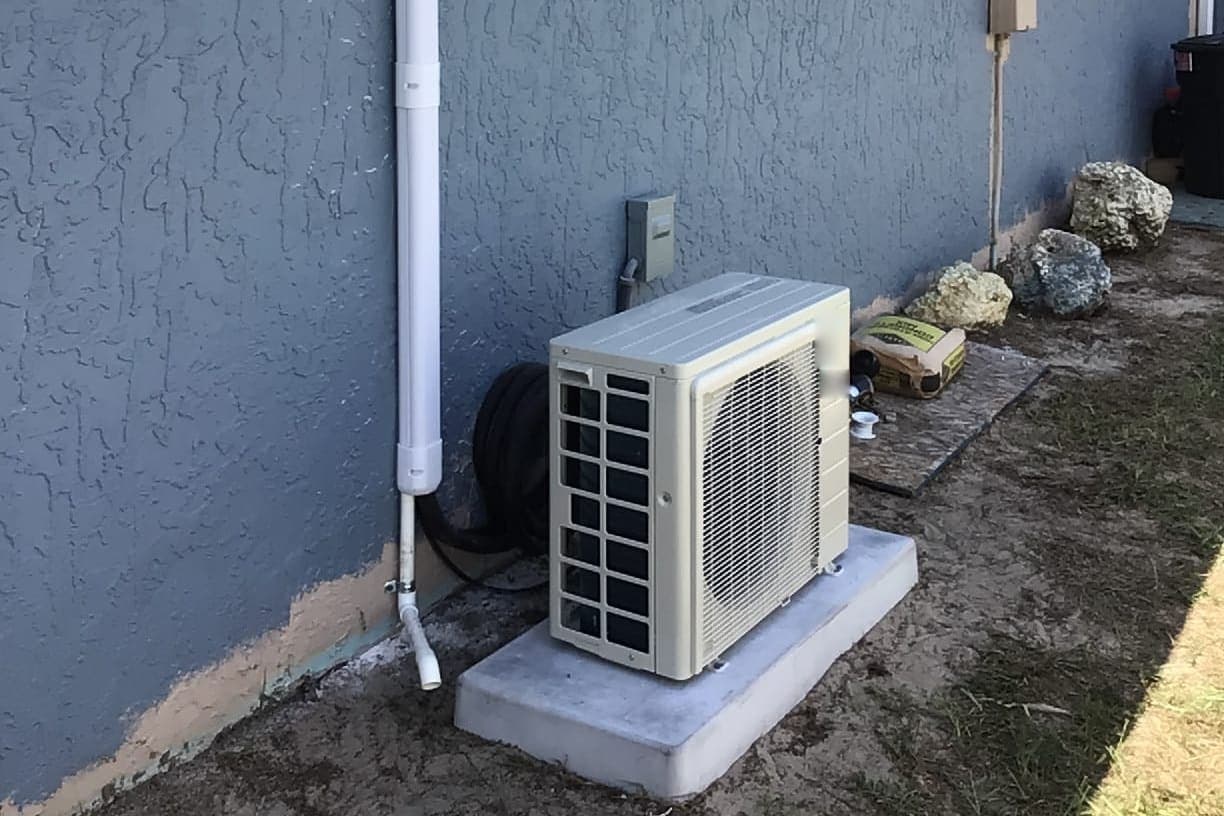
The federal tax credit for new air conditioners ended with 2025. What it covered, how to claim it for a 2025 install, and where the savings are now.
If you have read that a new air conditioner earns a federal tax credit, check the date on what you read. The credit existed for installations from 2023 through 2025, and it ended on December 31, 2025. This guide explains what it was, who can still claim it for a 2025 installation, and what to look at instead if your project is in 2026.
What the credit was
The Energy Efficient Home Improvement Credit returned 30 percent of qualifying costs on improvements to an existing home you owned and used as a residence. Central air conditioners could earn up to $600, and heat pumps up to $2,000, within a yearly cap of $1,200 for most improvements and a separate $2,000 limit for heat pumps. Equipment had to meet the efficiency requirements, and in 2025 each item also had to come from a qualified manufacturer whose identification number was reported on the return.
It was a nonrefundable credit. That means it could reduce the tax you owed to zero but would never produce a check on its own. A household with little tax liability may have gotten less out of it than the headline numbers suggested.
The date that decides everything
The IRS looks at when the installation was completed. Paying in 2025 for an installation finished in 2026 does not qualify. Property placed in service on or before December 31, 2025 does, and the credit is claimed for the year the installation was completed. New construction was never eligible, since the credit covered existing homes.
Claiming it for a 2025 installation
- Gather the final invoice, proof of payment, the model number of the equipment, and the manufacturer's certification statement.
- Confirm the efficiency level of the system against the requirements for its type, which your installer can read from the equipment paperwork.
- Complete Form 5695, Residential Energy Credits, and carry the result to your Form 1040.
- Keep all of it with your tax records, since the IRS can ask for proof of the date and the equipment later.
If your 2025 return is already filed and did not include the credit, you may be able to amend it, generally within three years. A tax professional can look at your return and tell you whether the credit would have reduced your tax.
Credit or deduction: why the difference matters
A deduction lowers your taxable income, so its value depends on your tax rate: a $1,000 deduction saves a household in the 12 percent bracket $120. A credit comes straight off the tax bill, so a $600 credit saves $600 whatever the bracket, as long as there is tax to offset. Neither one is the same as a rebate, which is money returned by a utility or manufacturer, usually after you send in a form.
Common misunderstandings
- "The whole system is covered." The credit paid a percentage up to a dollar cap per item, so most of the cost was always yours.
- "Any air conditioner qualifies." Only equipment meeting the published efficiency levels did.
- "There is still time." For 2026 installations, the federal credit is not available.
- "My state has the same credit." State and utility programs are separate, and each has its own rules and deadlines.
Where the savings are in 2026
Without the credit, a replacement is judged mostly on what it does after it is installed. A more efficient system costs less to run each month, and Florida homes run their air conditioners harder than almost any in the country. Look for the equipment's SEER2 rating, ask whether your electric provider has a rebate for the model you are considering, and compare financing terms as well as the price, because a lower monthly payment is not always a lower total cost.
Sizing matters as much as the rating. A unit that is too large cycles on and off, wastes energy and leaves the house damp; one that is too small never catches up. A proper load calculation, not a rule of thumb, is what protects the efficiency you are paying for.
How to check what is current
Tax rules change, and a page like this one is a snapshot. The IRS publishes its own page for the home-improvement credit and the related notices, and your electric provider lists any equipment rebates it still offers. A tax professional can tell you how any of it applies to your return.
Planning a replacement
If you are replacing a system this year, ask for a written estimate that shows the size, the efficiency rating, the brand and model, and the warranty, and keep it with your records. We are happy to walk through that with you, and to leave the tax questions to the professional who will see your whole return.
Questions we get asked about this
How much was the federal tax credit for a new air conditioner?
It returned 30 percent of qualifying costs, with up to $600 for a central air conditioner and up to $2,000 for a heat pump, inside a yearly cap of $1,200 for most improvements. It applied to installations completed from 2023 through 2025.
Can I still get the credit for a 2026 installation?
No. The federal credit ended on December 31, 2025, and the IRS looks at when the installation was completed, so paying in 2025 for an installation finished in 2026 does not qualify.
How do I claim the credit for a 2025 installation?
Gather the final invoice, proof of payment, the equipment's model number and the manufacturer's certification, complete Form 5695, and carry the result to your Form 1040. If you already filed without it, you may be able to amend the return.
What is the difference between a tax credit and a deduction?
A deduction lowers the income you are taxed on, so its value depends on your tax rate. A credit comes straight off the tax itself, but a nonrefundable credit can only reduce what you owe to zero.
Where can I save money on a new air conditioner now?
Check for an equipment rebate from your electric provider, compare manufacturer promotions and financing terms, and choose the right size and a good efficiency rating, since a system that runs efficiently saves money every month.
Want this looked at rather than read about?
More HVAC tips
Why a Home Inspection Matters Before HVAC Repairs or Replacement
Before HVAC repairs or replacement, a home inspection can uncover hidden issues. Learn why Florida homeowners trust inspections before major HVAC work.
AC Replacement Near Me: Tips for Choosing and Saving
Explore expert tips on AC replacement, costs, and choosing the right system for your home. Find trusted HVAC services near you today!
AC Repair Service | Professional Installation & Maintenance
Get reliable AC repair service, installation, and maintenance to keep your system running efficiently. Contact us today for expert solutions!