
Licenses, insurance, written estimates and honest answers: the checks that separate a reliable HVAC company from one that will cost you later.
Hiring someone to work on the system that keeps your house livable is a trust decision, and most of us make it with very little information. Fortunately, trustworthy companies leave a trail you can check in a few minutes. The following list is the one we would use if we were hiring a company for our own homes.
1. Check the license
In Florida, air conditioning work must be done under a state-certified contractor license. Ask for the license number and look it up on the Department of Business and Professional Regulation website, where it shows the name, the status and any discipline. SunCoast Air Conditioning works under license CAC1823350, and any company you consider should be able to give you a number just as readily.
2. Ask about insurance
A licensed contractor should carry liability insurance and workers' compensation coverage. Without them, an accident on your roof or a mistake that floods your ceiling can become your problem. Ask for a certificate, which a legitimate company can send the same day.
3. Look for a real address and a real phone line
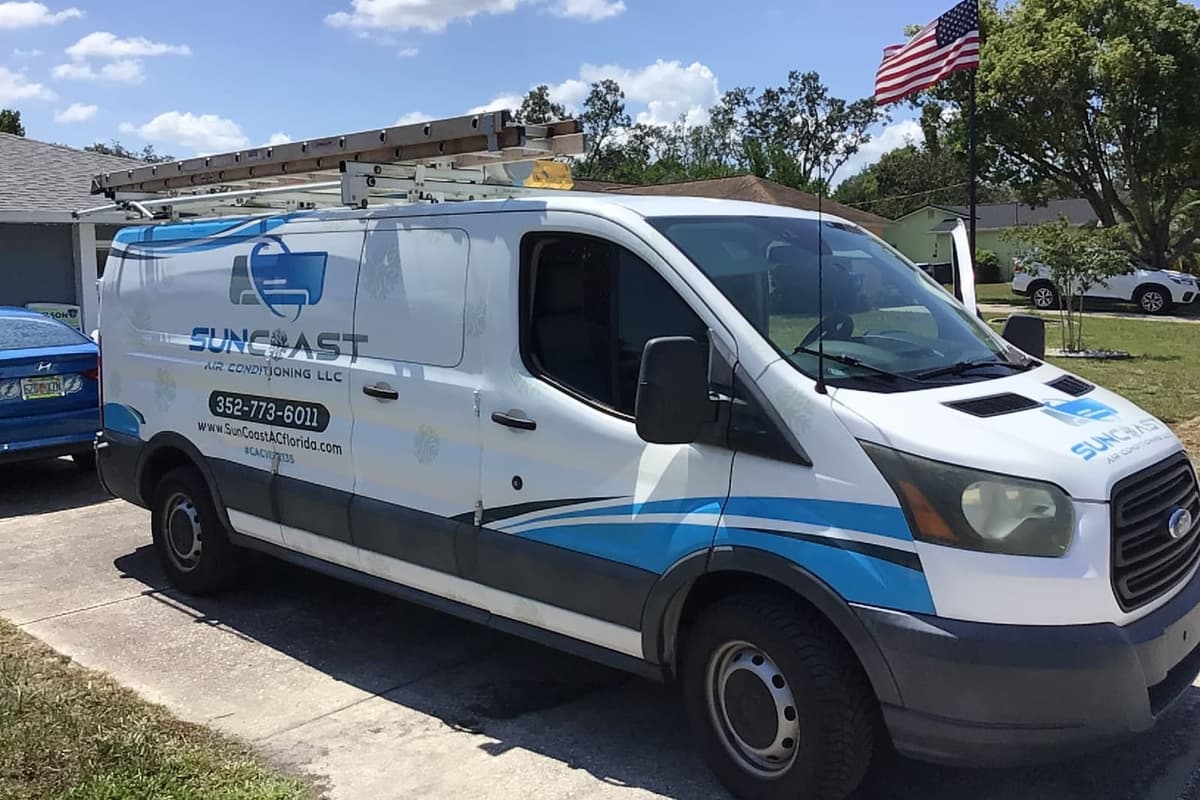
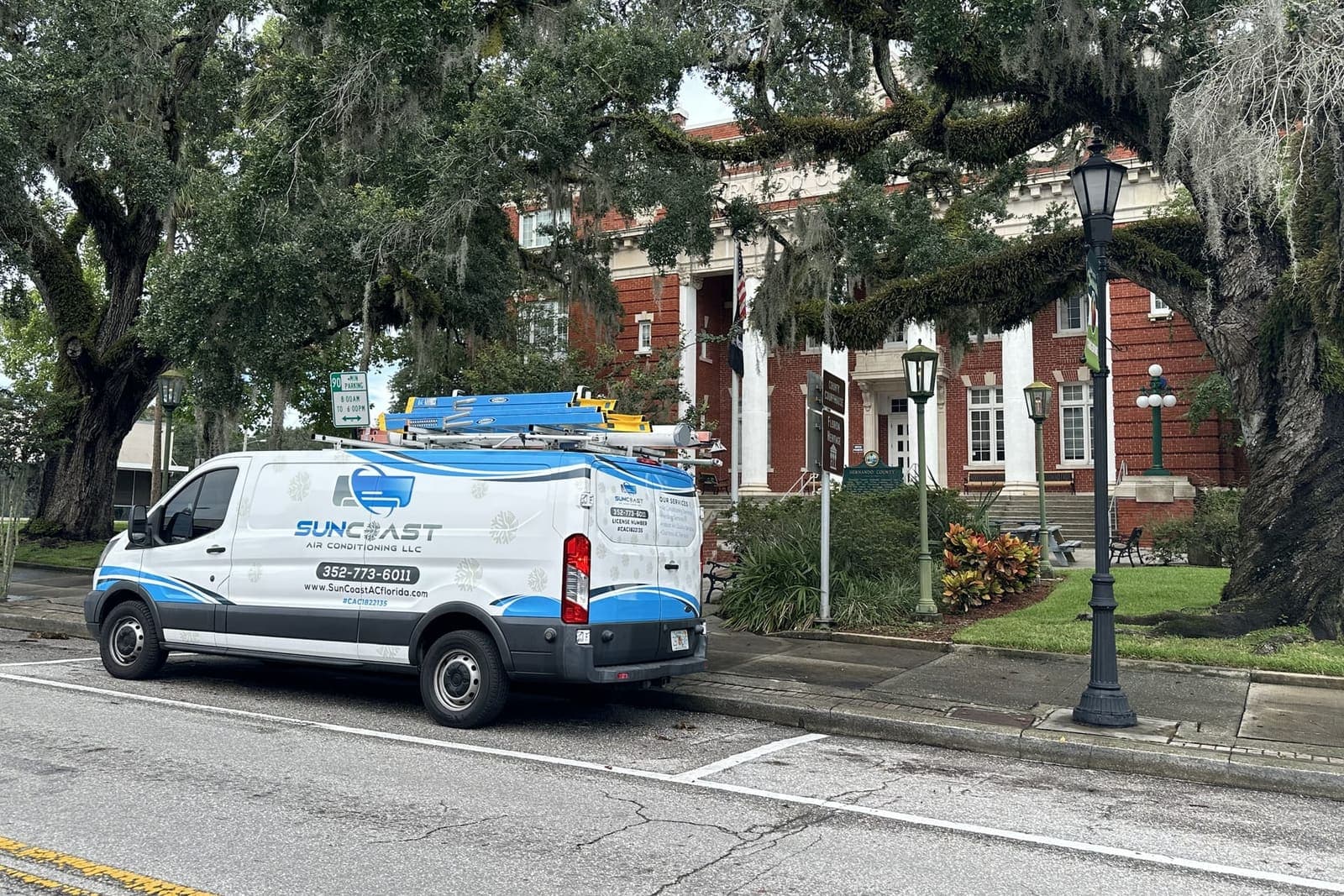
Companies that operate from a lead-generation website with no local office, or that answer with a generic name, are sometimes passing your job to whoever bids lowest. A local number, a branded vehicle and a technician who introduces himself by name are small signs that the company stands behind its work.
4. Read reviews the right way
A high average rating is useful, but the details matter more. Look for reviews that describe the problem, the technician and the outcome, and notice how the company responds to the occasional unhappy customer. A pattern of the same complaint, such as missed appointments or surprise charges, tells you more than one angry review.
5. Expect a written estimate
A trustworthy company will explain the work and put the price in writing before it starts. Replacement quotes should list the equipment brand and model, the efficiency rating, what is included such as permits, a new pad or line set, and the warranty terms. Be cautious of a number given over the phone for a replacement with no visit to the house.
6. Notice the diagnosis
A technician who explains what he found, shows you the failed part or the reading that points to it, and offers choices is working for you. One who names a major repair within minutes of arriving, and presses for an immediate decision, deserves a second opinion. A diagnostic fee is normal; being rushed is not.
7. Compare, but not only on price
An estimate far below the others usually leaves something out: a proper load calculation, the permit, quality duct connections, or a warranty. When two quotes differ, ask each company what its price includes, since the answer often explains the gap.
8. Ask what happens if something goes wrong
A reliable company has a clear answer on call-backs. Who do you phone, how fast do they return, and is the labor warrantied as well as the parts? The answers matter more after the sale than before it.
Red flags
- No license number, or one that does not match the name on the truck.
- Large cash deposits, or a demand to be paid in full before the work is done.
- Pressure to sign today because a discount is about to expire.
- Reluctance to put the scope of work in writing.
- Claims that an existing system is dangerous or illegal to run, without evidence you can see.
Trust is built in small moments
The best sign of a company you can rely on is an ordinary one: it shows up when it says it will, explains things plainly, charges what it quoted, and answers the phone when you call about it later. That is the standard we hold ourselves to, and the one worth looking for wherever you hire.
Questions we get asked about this
How do I check an HVAC company's license in Florida?
Ask for the license number and look it up on the Department of Business and Professional Regulation website, which shows the name, status and any discipline. SunCoast Air Conditioning works under license CAC1823350.
What insurance should an HVAC contractor carry?
Liability insurance and workers' compensation coverage. Without them, an accident on your roof or a mistake that floods your ceiling can become your problem, and a legitimate company can send a certificate the same day.
What should be in an HVAC estimate?
A written scope and price. A replacement quote should list the equipment brand, model and efficiency rating, what is included such as permits, a pad or line set, and the warranty terms.
What are the red flags when hiring an HVAC company?
No license number, large cash deposits or demands for full payment up front, pressure to sign today, reluctance to put the work in writing, and claims that your system is dangerous without evidence you can see.
Should I choose the lowest HVAC estimate?
Not automatically. A much lower estimate often leaves something out, such as a proper load calculation, the permit, quality duct connections or a warranty. Ask each company what its price includes.
Want this looked at rather than read about?
More HVAC tips
Why a Home Inspection Matters Before HVAC Repairs or Replacement
Before HVAC repairs or replacement, a home inspection can uncover hidden issues. Learn why Florida homeowners trust inspections before major HVAC work.
AC Replacement Near Me: Tips for Choosing and Saving
Explore expert tips on AC replacement, costs, and choosing the right system for your home. Find trusted HVAC services near you today!
AC Repair Service | Professional Installation & Maintenance
Get reliable AC repair service, installation, and maintenance to keep your system running efficiently. Contact us today for expert solutions!