
Small routines add up in a state where the air conditioner runs most of the year. Ten habits that lower bills and help your system last longer.
A Florida home spends more on cooling than almost any other expense in the house, so the habits around the system carry real money. None of the following needs a tool bag or a contractor. They are routines that take a few minutes and pay off every month.
1. Change the filter on a schedule
A dirty filter is the most common reason a system works harder than it should. Check it every month in summer and replace it when light no longer shows through. A reminder on your phone beats memory.
2. Pick a thermostat setting and leave it alone
Dropping the thermostat several degrees does not cool the house faster; it only asks the system to run longer. Choose a setting you can live with, such as 78, and let the system hold it. Each degree higher in summer generally trims the cooling bill by a few percent.
3. Use ceiling fans in the right direction
In summer, a fan turning counterclockwise pushes air down and makes you feel cooler, which lets you raise the thermostat a degree or two. Fans cool people, not rooms, so turn them off when you leave.
4. Keep the sun out
Closed blinds or reflective shades on the south and west windows cut the heat that enters in the afternoon. Shade trees and awnings do it outdoors, which is more effective since the heat never reaches the glass.
5. Leave the vents open
Closing vents in unused rooms seems like a saving, but it raises pressure in the ducts and can make leaks worse and the blower work harder. If a room does not need cooling, ask a technician about balancing the system instead.
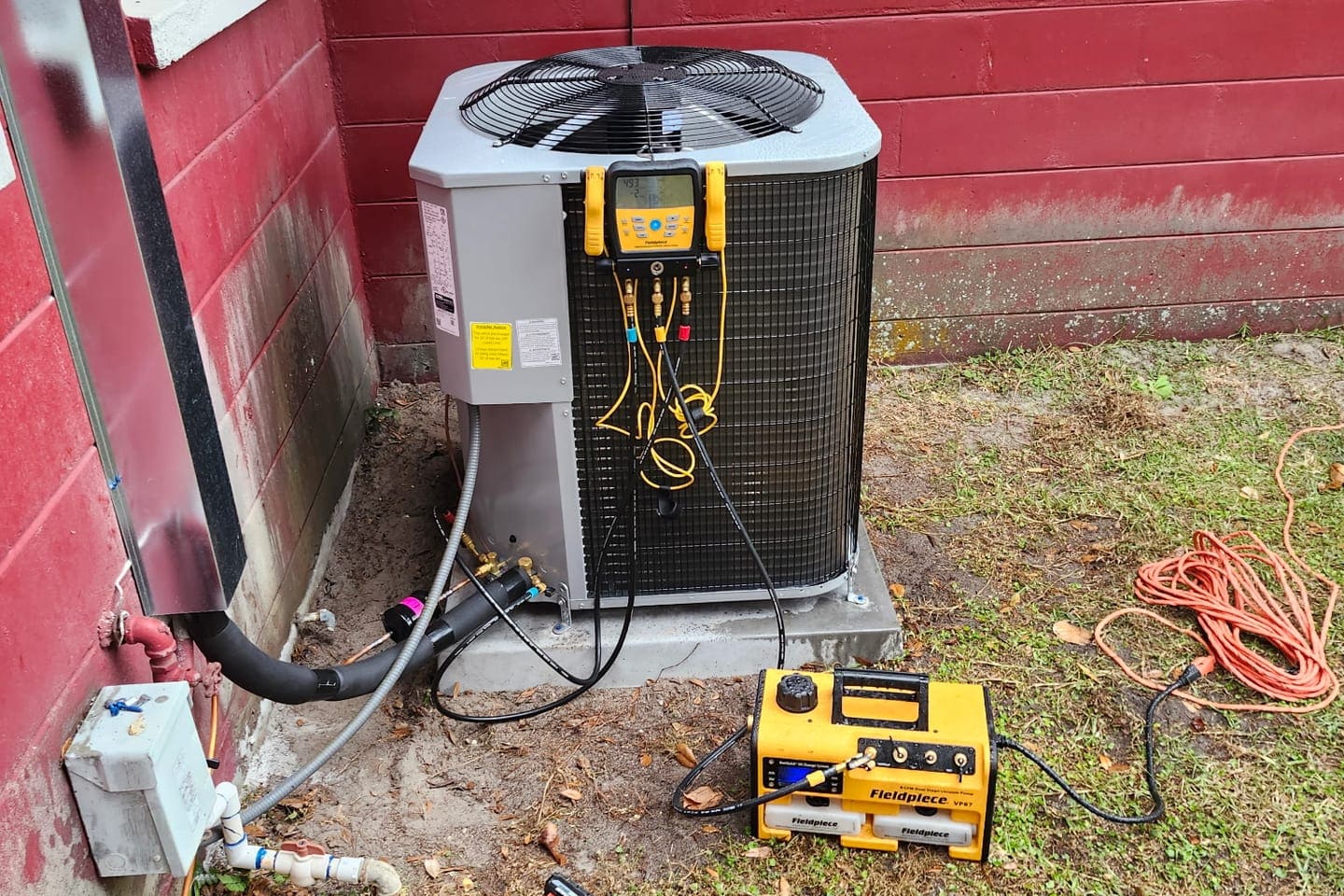
6. Keep the outdoor unit clear
The condenser needs to breathe. Trim shrubs back, move the garbage cans, and rinse off grass clippings and cottonwood fluff with a gentle garden hose, with the power switched off at the disconnect first.
7. Cook and dry at the right times
The oven, the dryer and a long hot shower all add heat and moisture the air conditioner then has to remove. Running them in the early morning or evening, and using the bathroom and kitchen exhaust fans, lightens the load during the hottest hours.
8. Mind the drain line
In humid weather the system produces gallons of water a day, and a clogged drain line is a common cause of leaks and of automatic shutoffs. If you see water around the indoor unit, or the system quits and the float switch is wet, call before the ceiling does the talking.
9. Listen and sniff
New noises, a burning smell, or a musty odor from the vents are information. The earlier a technician hears about them, the smaller the repair tends to be.
10. Book maintenance before you need it
A tune-up in spring is usually less than the cost of an emergency visit in July, and it finds the weak capacitor or the slow refrigerant leak before they become a breakdown. Many homeowners find a maintenance plan the easiest way to make it happen.
What these add up to
Individually, each habit saves a little. Together they shorten run times, protect the equipment from avoidable wear, and give you fewer surprises. If your bills have crept up and none of this explains it, a technician can check refrigerant, airflow and the ducts, which are the three places a hidden problem most often lives.
Questions we get asked about this
How often should I change my air filter?
Check it every month in summer and replace it when light no longer shows through. A dirty filter is the most common reason a system works harder than it should.
Does lowering the thermostat cool my house faster?
No. Dropping the setting several degrees only asks the system to run longer. Choose a setting you can live with and let the system hold it; each degree higher in summer generally trims the cooling bill by a few percent.
Is it a good idea to close vents in unused rooms?
Not usually. Closing vents raises pressure in the ducts and can make leaks worse and the blower work harder. If a room does not need cooling, ask a technician about balancing the system instead.
How can I take care of my outdoor unit?
Keep shrubs trimmed back, move anything stacked against it, and rinse off grass clippings and cottonwood fluff with a gentle garden hose after switching off the power at the disconnect.
Why does the drain line matter?
In humid weather the system produces gallons of water a day, and a clogged drain line is a common cause of leaks and automatic shutoffs. If you see water around the indoor unit, call before it reaches the ceiling.
Want this looked at rather than read about?
More HVAC tips
Why a Home Inspection Matters Before HVAC Repairs or Replacement
Before HVAC repairs or replacement, a home inspection can uncover hidden issues. Learn why Florida homeowners trust inspections before major HVAC work.
AC Replacement Near Me: Tips for Choosing and Saving
Explore expert tips on AC replacement, costs, and choosing the right system for your home. Find trusted HVAC services near you today!
AC Repair Service | Professional Installation & Maintenance
Get reliable AC repair service, installation, and maintenance to keep your system running efficiently. Contact us today for expert solutions!